This is the time of year here in the high (and colder) country,that we can start to assess the shedding ability of our stud. We do a final assessment at the end of January, but is now that the best shedders start to lose their wool.
Shedding is an interesting and important attribute of the Dorper sheep. It is affected by genetics, climate, nutrition, age of the sheep and type of cover. A fluffy, light loose cover will shed better than a coat that is either wooly or hairy. A lamb will not express its full shedding capacity in its first summer.
The shedding in a breeding up program will depend to a large extent on the original sheep breed. The Merino , for example will need to be at least 4th cross before total shedding is achieved, though after the second, few will need crutching and bellys will be light. Starting with a White Suffolk will give very good shedding after the 2nd cross, and this should be similar for a poll dorset, and believe that the Texel produces shedding on the first cross.
This is a bit of a generalisation and there are always exceptions to the rule, we have a few fullbloods with poor shedding, but this is now a rarity in the flock.
Shedding is an interesting and important attribute of the Dorper sheep. It is affected by genetics, climate, nutrition, age of the sheep and type of cover. A fluffy, light loose cover will shed better than a coat that is either wooly or hairy. A lamb will not express its full shedding capacity in its first summer.
The shedding in a breeding up program will depend to a large extent on the original sheep breed. The Merino , for example will need to be at least 4th cross before total shedding is achieved, though after the second, few will need crutching and bellys will be light. Starting with a White Suffolk will give very good shedding after the 2nd cross, and this should be similar for a poll dorset, and believe that the Texel produces shedding on the first cross.
This is a bit of a generalisation and there are always exceptions to the rule, we have a few fullbloods with poor shedding, but this is now a rarity in the flock.
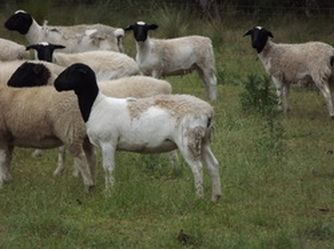
These are 4th cross ewes at 6 months of age, bred up from Crawlers Gully rams, poor shedding can still occur as in the ewe front left, but atypical of the group.
 RSS Feed